
Why Spring in New York is Actually the Worst Time for Ceramic Coating (And What to Do Instead)
Spring has Sprung, but is now really the perfect time for a Ceramic Coating?
Spring has finally arrived in New York. The snow is melting, the salt is being washed off the BQE, and you’re ready to give your car that glass-like finish it deserves. But before you book that ceramic coating service, there’s something you need to know: Spring in NY is arguably the most challenging season for a ceramic coating to bond correctly.
While everyone else is rushing to “spring clean” their ride, savvy car owners know that New York’s “shoulder season” presents three major hurdles that can ruin a $1,000+ investment.
The “Pollen Bomb” vs. The Curing Process
In New York, spring doesn’t just bring flowers; it brings a thick, yellow film of oak and pine pollen. Ceramic coatings require a 24 to 48-hour initial cure window where the surface must remain completely untouched by contaminants.
If a single microscopic grain of acidic pollen lands on your vehicle while the coating is still “flashing” (bonding), it can become permanently trapped underneath or create “high spots” and pits in the finish. Instead of a smooth shield, you end up with a sandpaper-textured disaster.
Humidity: The Silent Coating Killer
A successful ceramic bond requires a “sweet spot” of 40% to 60% humidity. New York springs are notoriously damp. One day it’s a crisp 55°F, and the next it’s a humid, rainy 70°F.
- High Humidity: Prevents the solvents in the coating from evaporating, leading to a cloudy, hazy finish.
- Low Temps: Below 50°F, the chemical reaction slows down so much that the coating may never fully “cross-link” with your paint, drastically reducing its lifespan.
The “April Showers” Trap
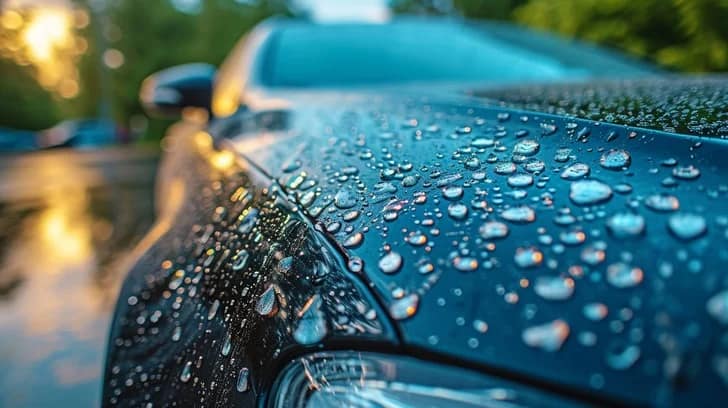
In the Hudson Valley, a clear sky can turn into a downpour in twenty minutes. If your freshly coated car gets hit by rain within the first 24 hours, the water minerals will react with the uncured chemicals. This results in permanent water spotting that can’t be washed off—it has to be machine-polished off, effectively stripping the coating you just paid for.

What Should You Do Instead?
Does this mean you should leave your paint unprotected? Absolutely not.
The goal for NY Spring is Decontamination and Temporary Shielding. Here is the professional “Fresh Details” strategy:
–Chemical Decon
A professional iron-remover wash to strip the winter road salt and brake dust that has “baked” into your clear coat.
-Clay Bar Treatment
Removing the physical grit that a standard car wash misses.
-High-Quality Sealant
Apply a high-grade synthetic sealant or a “ceramic lite” spray. These provide 3–6 months of protection against acidic rain and pollen without the temperamental 48-hour curing requirements of a full coating.
The Verdict: Wait for the “Stable Window”
The best time for a permanent ceramic coating in New York is typically late May through June, or September through October, when temperatures are stable and the “pollen bombs” have subsided.
Want to get your car “Spring Ready” without the risk? Check out our Exterior Detail Packages at freshdetails.net to strip away the winter grime and prep your paint for the perfect summer shine.